

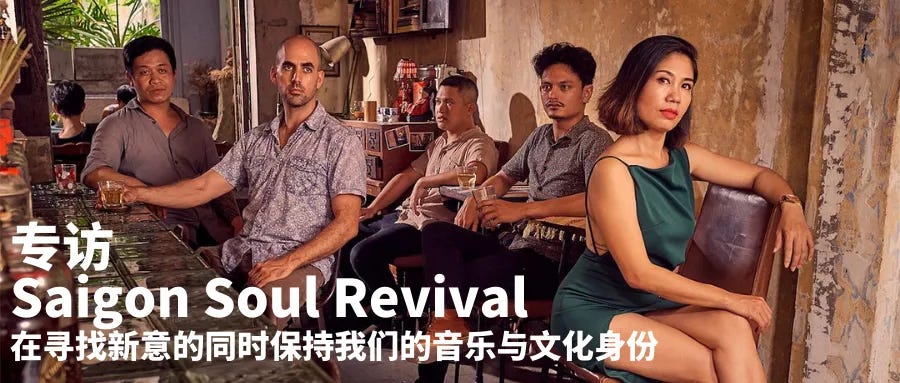
曾入围 2021 英国 Songlines 音乐奖,致力于将 60、70 年代的西贡经典音乐呈现给当代乐迷的五人组团体 Saigon Soul Revival(下称 SSR)将在本周开启他们的首次中国巡演——这支乐团在越南语的旋律与歌词之上,乐队融合灵魂乐、摇滚与 20 世纪中叶的舞曲气质,既怀旧又滚烫,赶在巡演之前,UPEE 有幸与 SSR 进行一期专访,贝斯手 Gabriel Kaouros 进行了回复,分享 SSR 的创作以及对这次中国巡演的期待。
UPEE:相较于乐队2019年发布的首张专辑《Hoa Ấm Xưa》,去年发布的第二张全长专辑《Mối Lương Duyên》在音乐层面似乎融入了更多民族乐器与民歌风格的创作——可以分享《Mối Lương Duyên》的灵感来源与创作过程吗?
SSR:我们作为一个“复兴”项目的初始灵感,主要来源于1960-70年代西贡受西方影响的律动型越南摇滚、灵魂乐和拉丁音乐。至于音乐中使用的越南传统乐器,我们的灵感来自越南多样的民间音乐,尤其是源自南部歌剧形式「改良戏」(cải lương)及其他语境中的「望古」(vọng cổ)风格。在《Mối Lương Duyên》中,多数包含传统乐器的歌曲最初创作时并未预设这些元素,但当我们与传统乐器演奏家 Hải Phượng(演奏筝和独弦琴)合作后,找到了无缝融合民族音效的方式。当然也有例外,比如《Mơ Xuân》从一开始就明确需要传统乐器,因其五声音阶旋律非常适合月琴和筝的演绎。
The main initial inspiration for the band as a revival project comes from the groovy western influenced Vietnamese rock, soul and latin music from Saigon in the 1960s and 70s. Regarding traditional Vietnamese instruments that we use in our music, we get the inspiration from a variety of folk music in Vietnam, especially vọng cổ which is a style found in southern folk opera called cải lương and other contexts. For Mối Lương Duyên most of the songs that feature traditional instruments were not originally written with the traditional instruments in them but once we had some sessions with traditional instrumentalist, Hải Phượng, who plays Đàn Tranh and Đàn Bầu, we found ways to incorporate the ethnic sounds quite seamlessly. In some cases it may be clear that we want a traditional instrument in the song from the start like for instance on the song Mơ Xuân which is based on a pentatonic melody which perfectly suits the Đàn Nguyệt and Đàn Tranh.
UPEE:可以分享对你们在音乐创作上带来比较多影响的音乐人吗?
SSR:一些来自1960-70年代西贡的影响深远的艺术家和作曲家,包括 Mai Lệ Huyền、Hùng Cường、CBC乐队、Carol Kim、Phương Tâm、Khánh Ly、Trịnh Công Sơn、Phạm Duy 和 Y Vân。当然,乐队每位成员也有各自的审美偏好,这些自然会影响我们的表达方式,最终融合成我们集体的声音。
Some influential artists and composers from 1960s-70s Saigon are Mai Lệ Huyền, Hùng Cường, CBC band, Carol Kim, Phương Tâm, Khánh Ly, Trịnh Công Sơn, Phạm Duy and Y Vân. Of course all the members in the band have their own tastes and influences which naturally impacts the way we express ourselves and results in a collective sound.
UPEE:无论是“Saigon Soul Revival”的乐团名称,或致力于在地音乐的发掘与再传播,我们都可以感受到越南历史与文化对你们的影响、启迪——可以分享成立这支乐队的契机吗?
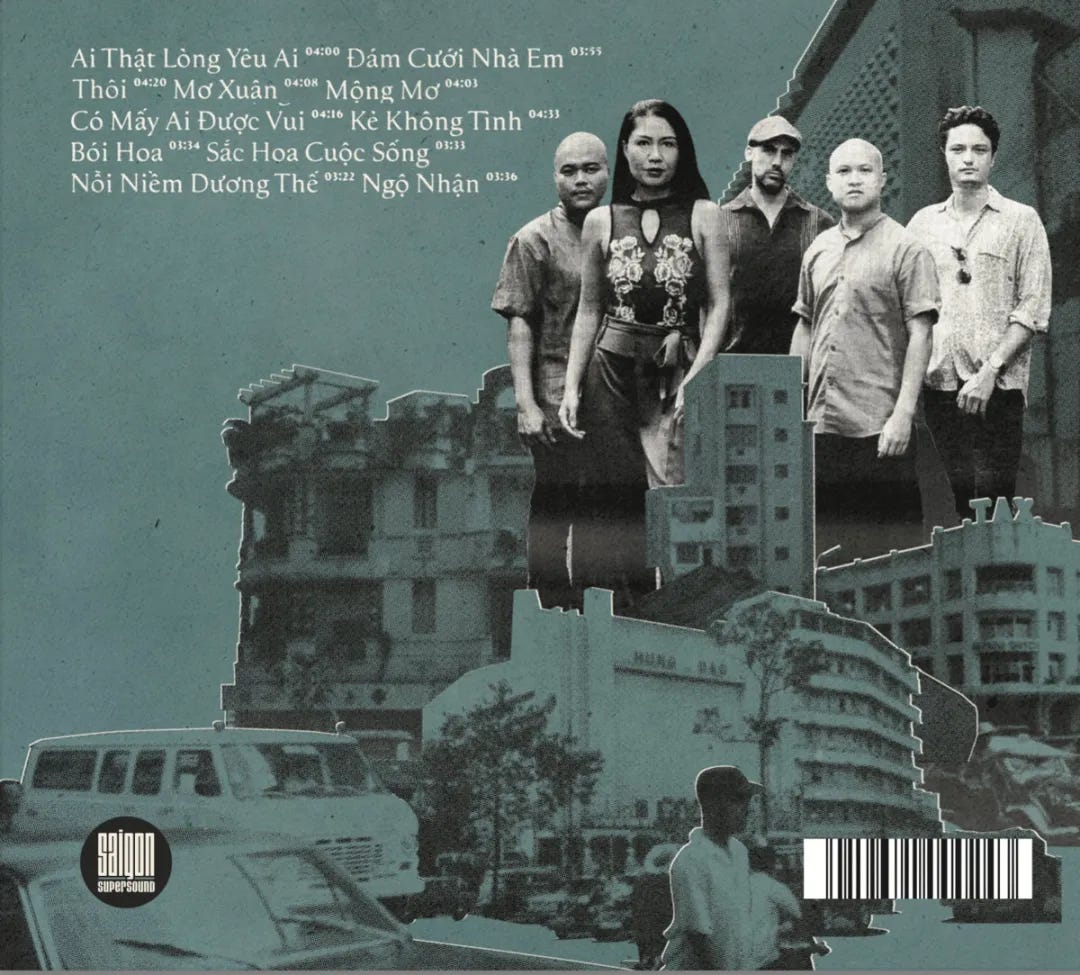
SSR:早在2014年我(Gabriel)来到越南之前,就已通过合辑《Saigon Rock and Soul》接触到1960-70年代西贡的音乐,并被其原始力量震撼。发现这些经典旋律已被时代湮没后,成立一支关于它的复兴乐队、让它们重回舞台的想法便一直萦绕于心。两年后,我在即兴演奏会上结识了Indy和Pookie(吉他手和原贝斯手),我们决定组建乐队,故事由此开始。经过成员更迭,当我们遇到Jan(他当时正在发行类似风格的1975年前越南音乐合辑《Saigon Supersound》)后,便有了更多创作原创作品和发行专辑的动力与资源。之后的一切大家都能看到、听到啦!
Even before I (Gabriel) arrived in Vietnam in 2014 I had already heard some amazing Saigonese music from the 1960s-70s from the compilation "Saigon Rock and Soul" and was absolutely blown away by how raw and powerful it was. After noticing that those old rocking tunes were nowhere to be heard, it was always in the back of my mind to start a revival band and bring that music back to the stage. 2 years later, after meeting Indy and Pookie (the guitarist and original bassist) at a jam session we decided to start a band and that's when it started. Over the years we changed a few members and once we met Jan (who was releasing a similar pre 1975 Vietnamese music compilation called Saigon Supersound) we had the motivation and the means to start working on more originals and release some records. The rest is history!
UPEE:Saigon Soul Revival 的创作注目于“1975 年以前的西贡经典音乐”,可以分享你们你们为何选择了“1975 年”这一时间点吗?
SSR:从1960年代到1975年西贡陷落,这座南部首都曾拥有蓬勃的音乐场景,诞生了许多越南最具标志性的作品。这一时期深情的经典音乐(多为波莱罗等慢节奏风格)被称为「黄金音乐」(nhạc vàng)。当时大量美军士兵带来了欧美流行的摇滚、灵魂、拉丁、迷幻、民谣等风格,许多西贡年轻音乐人和作曲家将这些元素融入创作,形成了独具越南特色的融合表达。1975年后,受西方影响的音乐逐渐消失,许多音乐人移居海外,标志着那个音乐黄金时代的终结。
From the 1960s until the fall of Saigon in 1975 there was a vibrant music scene in the then southern capital which produced some of the country's most iconic compositions. The classic heartfelt music from this period which was often in slow styles like boleros was referred to as nhạc vàng. There was a large presence of American soldiers who brought all sorts of popular music of the time from the USA and UK including rock, soul, latin, psychedelic, folk and so on. Many of these styles were adopted by young Saigonese musicians and composers who then crafted their own Vietnamese music blending their own style, heart and soul into the music. Western-influenced music was no longer played after 1975, and many musicians moved abroad, bringing the golden age of music to an end.
UPEE:似乎在很多时候由于英文世界在音乐传播上的广泛影响力,许多乐迷对非母语和非英语的音乐发行都带着不少“猎奇”的视角——作为创作者,你们会如何看待这样的角度?
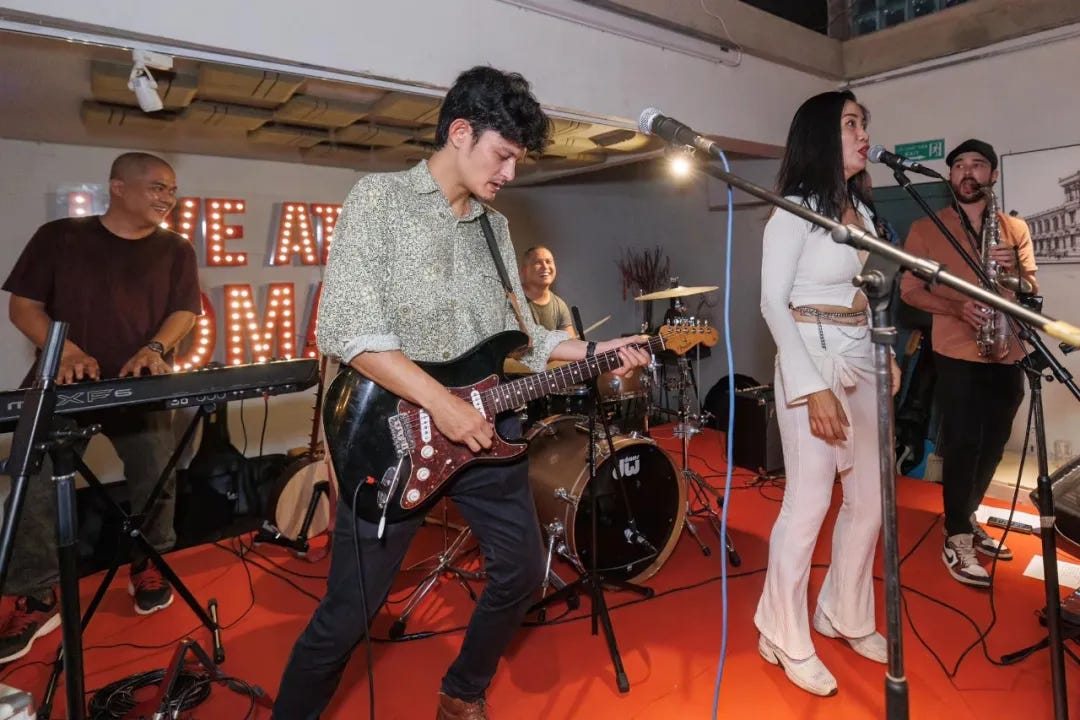
SSR:我们理解像我们这样的“非母语/非英语”乐队在西方难免被归类为“世界音乐”,这种“异域色彩”或许正是吸引点之一,但实际上我们并不在意这类标签。能跨国演出并收获来自不同文化背景、不同年龄群体的喜爱,已让我们深感荣幸。作为创作者,我们并不认为这类标签会限制真诚的表达。我们始终在探索新声音与新想法,同时保持清晰的音乐/文化身份——这才是真正的挑战!
We understand that a "non-native/non-English" band like ourselves is inevitably categorised as "world music" in the west and one of the things that might make us interesting is this "exotic" appeal, but honestly we don't really care much about such labels. We feel so grateful to have performed internationally and received so much love from people around the world across generations and cultures. As creators we don't feel like such labels limit our ability to express ourselves honestly. We are always trying different ways to develop our sound and explore new ideas while maintaining a clear musical/cultural identity. That's the real challenge!
UPEE:在 Saigon Soul Revival 世界各地演出的经历中有哪些特别难忘的可以在此与我们分享吗?
SSR:最难忘的包括去年在英国WOMAD音乐节和葡萄牙城堡举办的FMM音乐节的演出——氛围、观众和活动本身都无与伦比。今年初澳大利亚WOMADelaide音乐节也充满激情!作为观众我们也乐在其中。最近一次奇特经历是在汉堡:我们在一艘曾用作冷藏船的旧船上演出,该船自1992年起改为社会文化场所。我们在船上住了三晚,虽不奢华但绝对难忘(笑)!
Some of the most unforgettable moments were playing at WOMAD in the UK and FMM festival in a castle in Portugal last year. Such amazing events and crowd and vibe. Also WOMADelaide in Australia earlier this year was fire! We enjoyed the festivals as audience members too! The last crazy experience we had was in Hamburg where we played on an old former refrigerated ship which was turned into socio-cultural event location since 1992. We stayed on the boat for 3 nights. Not the most luxurious but definitely an unforgettable experience haha!
UPEE:这是你们第一次来到中国进行巡演,对此有什么期待吗?
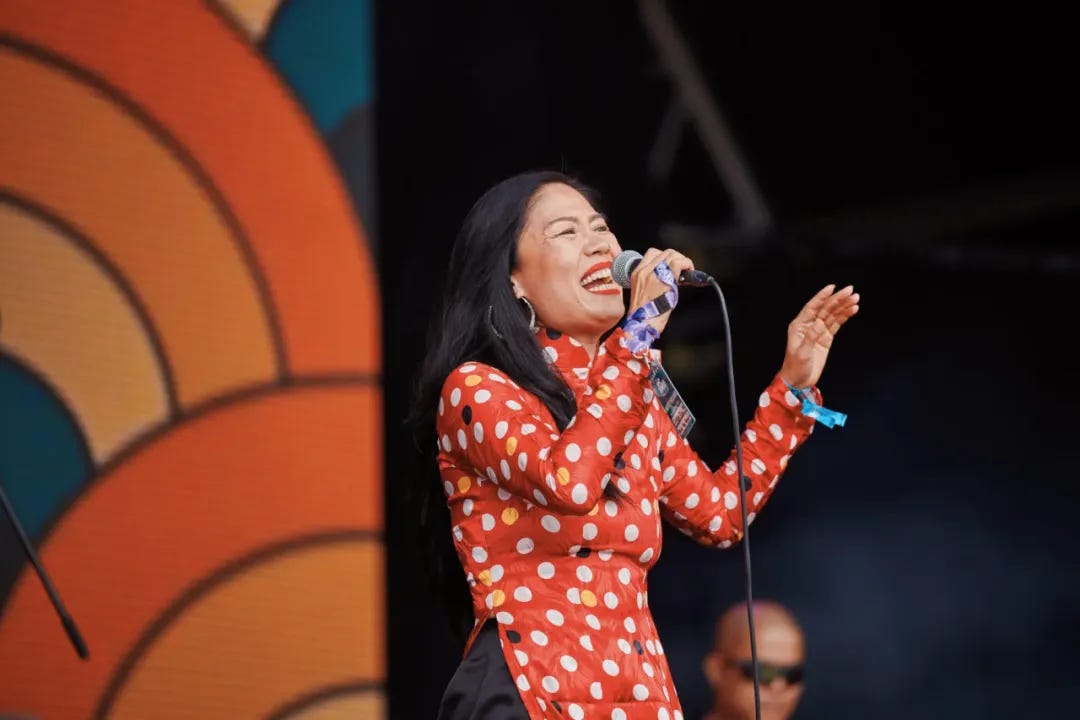
SSR:因为是第一次在中国演出,我们不确定会发生什么,但非常期待与中国观众分享我们的音乐以及越南历史文化。乐队中有成员的朋友居住在中国,听说过这里活跃的音乐场景和专注的观众,我们十分向往这次体验!当然也希望能有更多时间旅行并深入了解中国文化,但我们必须尽快返回越南筹备新专辑;)
We are not sure what to expect because it will be our first time performing in China but we are very excited to share our music as well as a piece of Vietnamese history and culture with our audiences in China. Some of us have friends living in China and have heard about the cool music scenes and attentive audiences so we are really looking forward to the experience! Of course we wish we had more time to travel around and get to know the country and culture but we need to head straight back to Vietnam to work on a new album ;)
UPEE:如果以“越南音乐场景”一员的身份向中国的乐迷们推荐其他来自越南的音乐人,你们会推荐哪些?
SSR:强烈推荐前文提到的1975年前艺术家及相关合辑,它们承载着西贡音乐的瑰宝。至于当代越南音乐人,中国乐迷可以关注 Ngọt、7uppercuts、Skeleton Goode、Cam。
Definitely the pre 1975 artists and compilations mentioned earlier for some good old Saigonese gems. As far as more recent artists from Vietnam, Chinese fans can check out Ngọt, 7uppercuts, Skeleton Goode, Cam.
编辑 | 石田吉藏
图片 | thedot.magazine, TravelBeginsat40, Saigoneer
采访联络鸣谢:Max@OddHarmony
-